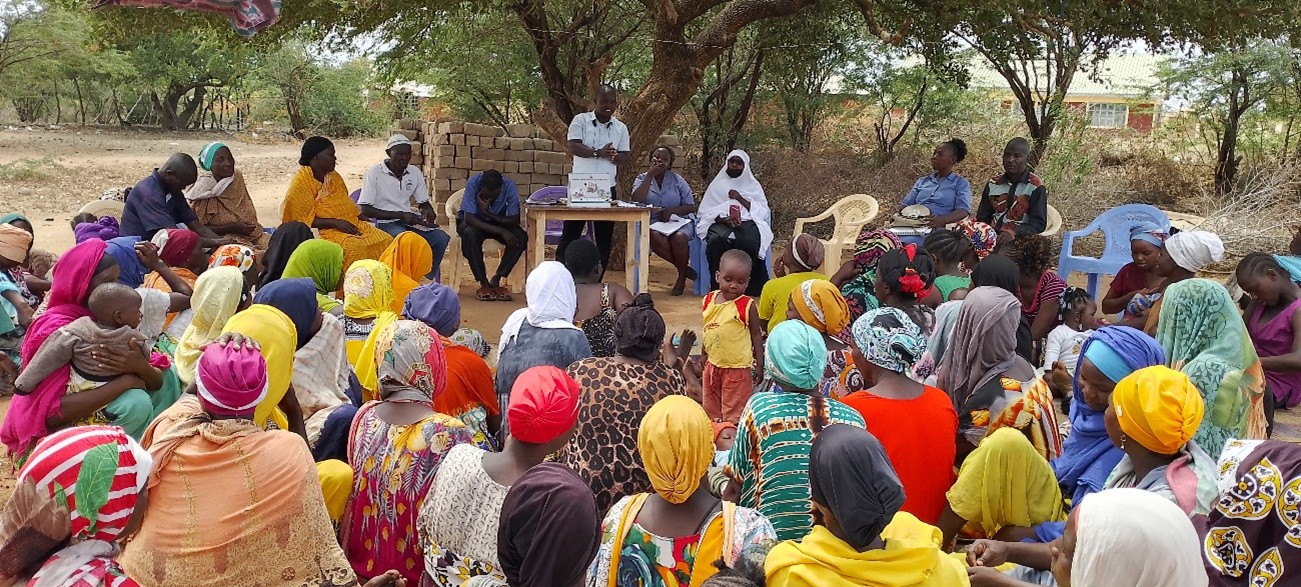
Pumwani Community Health Unit (CHU), linked to Pumwani Dispensary (Level 2 facility) in Lafuma Village, Ndura Location, serves 959 households, with a catchment population of 4,536 people. The CHU operates with 10 Community Health Promoters (CHPs) and 7 Community Health Committee (CHC) members.
Prior to structured community interventions, the area faced critical maternal and child health challenges including:
- Low uptake of ANC, FP, immunization, and CWC services, with women often attending ANC late
- Inconsistent skilled deliveries, with many women delivering at home under unsafe conditions.
- High malnutrition rates among children.
- Poor hygiene and sanitation at household level.
A significant barrier to maternal and child health in the community was the “Mwenye” syndrome, a deeply rooted cultural belief in male ownership over women’s health decisions. Women were often not empowered to seek health services independently, particularly family planning (FP) and reproductive health services. Originating from the Swahili word for “owner,” this syndrome limited women’s autonomy, granting men control over their wives’ health, mobility, and household decision-making. As a result:
- Women often had to access FP services in secret, taking advantage of market days or other opportunities to avoid scrutiny.
- Discovery of FP use by husbands sometimes led to conflict, with some women being forced to remove contraceptives.
- Overall health-seeking behaviour among women was restricted, contributing to low service uptake and perpetuating risks to maternal and child health.
Tana River County’s modern contraceptive prevalence rate is 11%, significantly lower than the national average of 57% among married women (KDHS 2022).
Click the story below to read more.