West Pokot County is among the top honey producing Counties in Kenya with an estimated 15,207 rural households engaged in beekeeping and approximately 91,636 beehives (KIPPRA, 2024). The County has substantial acacia vegetation which is a very important source of nectar and pollen, thus supporting the production of high-quality honey.
Despite this potential, beekeeping has traditionally been a male-dominated activity among the Pokot community. Traditional log hives were hung high up on trees and cultural norms around climbing and honey harvesting largely excluded women from direct participation in production and economic benefits from the honey value chain (Twende Pamoja, n.d.). Farmers also suffered poor access to the market and exploitation by brokers, with honey being quoted as low as KES 100 per kilogram.
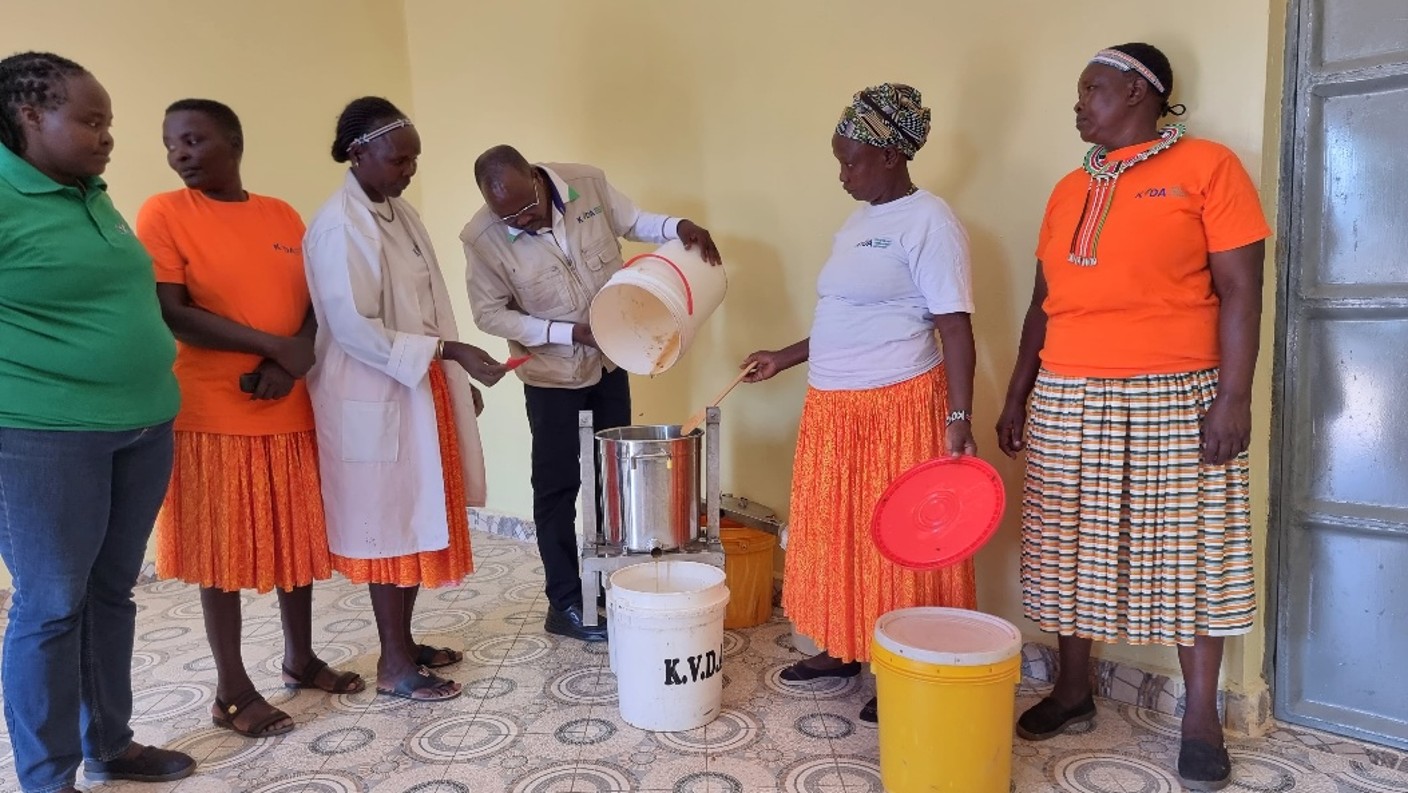
This is changing, as modern Kenya top-bar and Langstroth hives, training in improved beekeeping and honey processing, organization of producers and stronger market linkages are enabling women to increasingly participate in honey production as a source of livelihood. The County Government of West Pokot through Kerio Valley Development Authority (KVDA) and other actors have supported the modernization of the value chain through the promotion of improved hives, training of farmers and provision of a structured market for honey. Further support from E4Impact Foundation under the Ustahimilivu program funded by the European Union has supported 38 honey producer groups through training in processing and value addition and linked them to Cheror Honey Processing Unit in Lomut, which has the capacity to process up to three tons of honey per month.
Results
- There are over 1,000 modern hives owned by women's groups in Kodich.
- Honey is being sold at KES 400/kg compared with as little as KES 100/kg previously.
- The Kapereng Women Group which comprises of 16members are earning up to KES 800,000 annually.
- Income received is being used for food, education and household needs.
- Acacia trees are increasingly becoming valuable to communities in an economic sense since they support honey production.
What initiative has your County taken to empower women through beekeeping and improve their livelihoods? We would love to hear your story.
Visit https://maarifa.cog.go.ke/ to learn more about the successful initiatives on service delivery our Counties are undertaking.